

Table of Contents
Smart Summary: Here’s what this blog on engagement behavior will explore
- Introduction: Frames engagement cycle as lifecycle for predictable participation. Introduces 3 stages: entrance, leveling, leaving.
- Definition: Explains repeating loop with feedback-driven renewal. Details self-reinforcing patterns.
- Importance: Covers boom-bust avoidance and organic growth benefits. Highlights intervention opportunities.
- 3-Step Framework: Breaks down entrance (identity/actions), leveling (progress/roles), leaving (closure/legacy) with metrics.
- System Integration: Shows interdependent stages preventing common failures. Emphasizes holistic design.
- Influences: Lists friction, feedback, rituals, diversity as cycle drivers. Provides targeted fixes.
- Kannect’s Role: Introduces Kannect’s features and tools for each stage and analytics as lifecycle enabler.
- Join us: Action-oriented next steps with comprehensive answers to FAQs.
Let’s dive in!
Communities often focus on “getting people in” and “keeping them engaged,” forgetting that engagement is a continuous process rather than a one-time event. Every member moves through a natural engagement cycle, spanning their initial introduction, growing involvement, and eventual renewal or exit. Designing with this engagement cycle in mind makes participation smoother and more predictable, turning fragile, inconsistent groups into resilient ecosystems where members feel connected and motivated over the long term.
What is an Engagement Cycle?
An engagement cycle is the repeating loop of member interactions, starting from awareness, through active participation, to renewal or departure. This cycle is shaped by ongoing feedback, motivation, and thoughtful design. Members become aware of the community, join in, deepen their contributions, sometimes leave or take breaks, and then may rejoin or renew their commitment. It’s not a one-way path but a continuous loop where each stage feeds the next.
For example, a local arts group might start engagement with an open call to a gallery event (awareness), then members begin sharing their artwork (participation), later help organize shows (growth), and some take breaks due to life changes (exit), only to come back when new projects arise (renewal). The group thrives because leaders and organizers plan activities and communications supporting members at every stage, so participation feels natural and sustainable.
Designing for the engagement cycle means structuring the community experience so members always know what to expect next and feel supported at each phase. Clear onboarding welcomes newcomers while offering simple ways to get involved immediately. Regular check-ins and skill-building opportunities help members grow their roles over time. When members leave or become less active, thoughtful exit processes leave doors open for return. And renewal campaigns remind former members why they joined in the first place.
By respecting the engagement cycle, communities generate self-reinforcing participation patterns that prevent drop-offs and fuel organic growth. Members transition smoothly from curious newcomers to active contributors and valued leaders, making the community lively and sustainable. Instead of chaotic bursts of activity that fade quickly, the engagement cycle creates a dependable rhythm that powers thriving, long-lasting digital ecosystems.
Why the Engagement Cycle Matters
Ignoring the engagement cycle often results in boom-and-bust patterns where many people join a community at once, but participation quickly fizzles out, leaving silence and inactivity. This surge followed by decline happens because communities fail to recognize that engagement is not a single event but a repeating process with different stages.

Mapping the stages of the engagement cycle helps leaders spot where members get stuck or drop off, these friction points become targets for focused improvements. For example, a new member onboarding phase might be confusing, causing many to leave early. Addressing this with clearer guidance and welcome rituals can keep members moving forward. Similarly, renewal phases might see declines if outreach is weak. Leaders who plan for these cycles create smooth transitions that keep members active longer.
Viewing engagement as renewable means communities invest in sustainable practices rather than short-term spikes. This mindset supports higher retention because members’ needs are met throughout their journey from first hearing about the community, to becoming deeply involved leaders, and even when members take breaks or leave. It also powers advocacy, as satisfied members who experience positive cycles naturally invite others and help evolve the community’s purpose.
Ultimately, designing for the engagement cycle builds resilient, evolving communities. Instead of erratic bursts of activity that fade, participation grows steadily like breathing, expanding and renewing through predictable stages. Communities that embrace this cycle see lasting value, stronger connections, and a richer member experience for everyone involved.
The Complete 3-Step Engagement Cycle Framework
Stage 1: Entrance – Forming Psychological Identity
Entrance defines a member’s community role through orientation, confidence, connection, and clear starting actions. Newcomers quietly scan the space: they notice what people post, how others respond, and whether it feels safe to be seen. A simple, guided entrance like a welcome message plus a prompt that says “Share one thing you’re hoping to learn here” with examples, helps them test the waters without fear.
An online learning group, for example, might invite new members to introduce themselves in a pinned thread and react with an emoji to one other post. When a newcomer receives a warm reply or a few likes, their first impression shifts from “I’m just a number” to “People notice me here,” which starts shaping their identity as “someone who belongs.” The clearest success signal at this entrance stage is one meaningful action in the first week, such as a prompted intro, a question, or even a thoughtful reaction that shows engagement rather than silent scrolling.
Stage 2: Leveling – Growth Through Progressive Contribution
Leveling is where members grow from quiet observers into active contributors through small, then steadily bigger roles. At first, a member might only comment on posts or share a useful link. Over time, they might answer questions, suggest topics, or co-host a small event. Later, they might mentor newcomers or lead a regular ritual like a weekly Q&A.
For example, in a startup founder community, a new member might begin by liking posts, then share a short story about a failed launch, later join a panel call, and eventually host a monthly “founder roundtable.” Each step deepens their sense of “I have something to offer here.” If members stay stuck at the same low level for months, energy fades and they drift away. Leveling works best when progress is visible; badges, shout-outs, or simple labels like “New,” “Regular,” and “Host” help members see their growth. A good success metric at this stage is monthly advancement in involvement depth: more people moving from just reacting to posting, from posting to helping, and from helping to leading.
Stage 3: Leaving – Healthy Closure and Legacy
Leaving recognizes that priorities change and that exits are a normal, healthy part of any community. Instead of treating departures as failure, this stage treats them as completion. When someone steps back, the community can thank them, reflect their impact, and keep the door open.
For instance, a volunteer who has organized many events might share that they’re moving cities; the community can post a thank-you note, share highlights of their contributions, and invite them to join an alumni channel. This turns “quiet disappearance” into a story of legacy: “You mattered here, and you’re welcome back anytime.” Some members will still leave without a word, but even gentle practices like a check-in email asking, “Is this still useful for you?” with an option to pause or switch to a lighter mode, can turn hard exits into soft edges.
A healthy success metric at this stage is grateful departures over silent churn: more members leaving with appreciation, referrals, or a willingness to return, instead of simply vanishing. Over time, this makes the engagement cycle feel kind and complete, strengthening trust in the community as a place that honors every stage of the journey.
The Three Stages Form a System
The three stages: Entrance, Leveling, and Leaving work together as a system, not in isolation. Entrance without Leveling leads to fleeting excitement where new members arrive but don’t grow their involvement beyond a basic step, causing interest to fizzle quickly. For example, a hobby group that only welcomes members but doesn’t offer ways to contribute or rise in status may find many join but few stay active.
Leveling without a solid Entrance phase isolates the core members and creates a closed group feel. If members leap into deep roles without a clear, welcoming start, newcomers struggle to find their place and often feel left out. Imagine a startup community where a small group runs everything tightly, while new people watch silently because they never felt truly invited in or oriented.
Undesigned Leaving, the absence of thoughtful exit and transition processes, breeds resentment or silent drop-off. When members leave abruptly without closure, others may feel abandoned or confused, and opportunities for referrals or future returns are lost. For instance, volunteers in a nonprofit who quietly disappear without acknowledgment leave gaps that hurt morale and cause friction.
Integrated engagement cycles create journeys where communities thrive not only by retaining members but by welcoming new ones, growing involvement, and honoring departures. This system nurtures progression, making participation feel natural and sustainable, with each stage feeding into the next. The community moves from chaos and burnout towards steady rhythm, stronger connections, and evolving leadership, a true resilient ecosystem that lasts.
| Stage | Goal | Psychological Need | Operational Focus |
|---|---|---|---|
| Entrance | Help members start well | Belonging, clarity | Onboarding, first actions |
| Leveling | Help members grow | Progress, contribution | Roles, rituals, visibility |
| Leaving | Help members exit well | Completion, legacy | Alumni system, referrals |
Influences on the Engagement Cycle
Engagement behavior flows smoothly through the cycle when these key factors support each stage:
Friction reduction: Ease in navigation and actions accelerates progression.
Simple steps and clear paths speed up movement from new member to regular contributor. When menus are easy and actions take one click like a single “Join Chat” button, people don’t get stuck and keep going.
For example, a book club app with a home screen showing “Post Your Review” right away helps newcomers post in minutes. This cuts confusion at entrance and speeds leveling, keeping the cycle of engagement moving without stalls.
Feedback mechanisms: Recognition and responses reinforce loop continuity.
Quick thanks, likes, or replies make members feel seen, encouraging them to stay in the cycle longer. Positive nods at each stage like “Great first post!” build confidence and pull people back.
In a fitness group, a leader replies to every newbie workout share with “Nice start, keep it up!” This small act turns one post into weekly check-ins, linking entrance to leveling and preventing early drops.
Rituals and rhythms: Predictable events maintain flow between stages.
Regular happenings like weekly chats or monthly meets create habits that bridge stages naturally. People know what comes next, so participation feels steady.
A gardening community hosts “Sunday Soil Share” every week, newbies watch first (entrance), then share tips (leveling), and veterans lead (growth). This rhythm keeps the engagement cycle alive, even during busy times.
Member diversity: Tailored paths accommodate varying engagement levels.
Different people join at different speeds, some dive in fast, others lurk first. Custom options let everyone find their fit, sustaining the cycle for all.
A parent group offers “Quick Tip Polls” for busy moms (low effort), “Deep Dives” chats for chatty ones (high effort), and “Watch Only” mode for quiet starters. This matches needs, helping slow engagers catch up without pressure.
These influences work together to make the engagement cycle strong and steady. Communities that focus here see fewer drop-offs and more growth at every turn
How Kannect Supports the Engagement Cycle
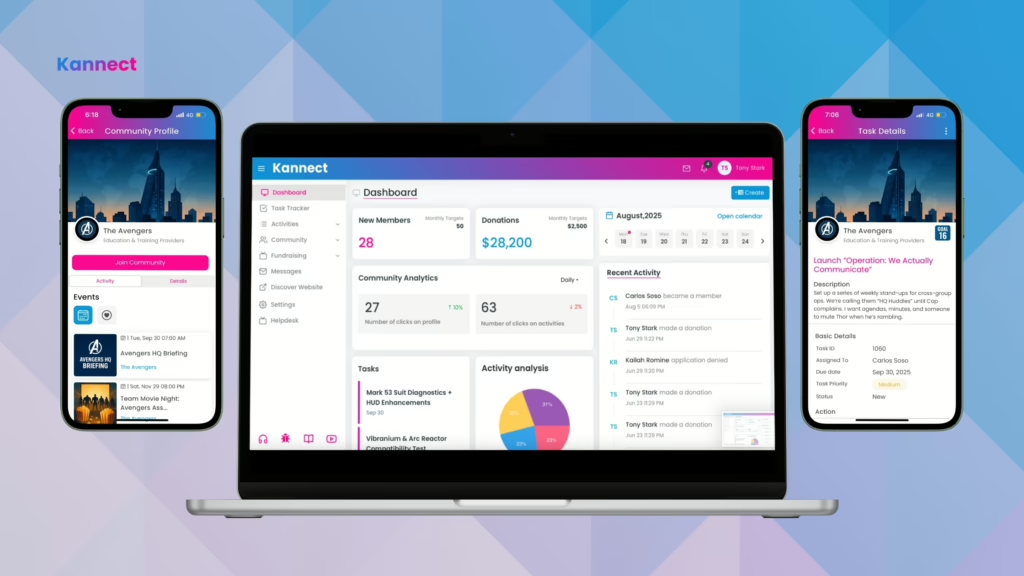
- Automated Entrance Onboarding:
Kannect simplifies the welcome process by automating new member introductions, providing clear first steps, and sending personalized greetings. This helps new members feel valued and take their first meaningful action quickly, which is crucial for entering the engagement cycle smoothly. - Leveling Progress Trackers and Role Tools:
The platform offers task management tools to assign tasks and roles making it easy to track member contributions over time. Visual progress marker with an intuitive dashboard help members see their growth, encouraging deeper involvement and steady movement through the engagement cycle’s growth stage. - Exit Surveys for Alumni Nurturing:
Kannect’s feedback tools can be used when members leave or pause their participation, turning exits into opportunities for connection and future returns. This supports a healthy leaving stage by acknowledging contributions, maintaining goodwill, and keeping doors open for alumni advocacy and referrals. - Analytics to Monitor Stage Health:
Leaders can access detailed reports on member activity, onboarding effectiveness, progression rates, and drop-offs at different stages. These insights highlight friction points, enabling targeted interventions to keep the engagement cycle flowing and prevent stagnation or loss. - Scalable Lifecycle Management:
By combining all these features into one easy-to-use system, Kannect allows communities of all sizes to build complete, self-sustaining engagement cycles effortlessly, transforming member journeys from chaotic spurts into predictable, resilient patterns of participation.
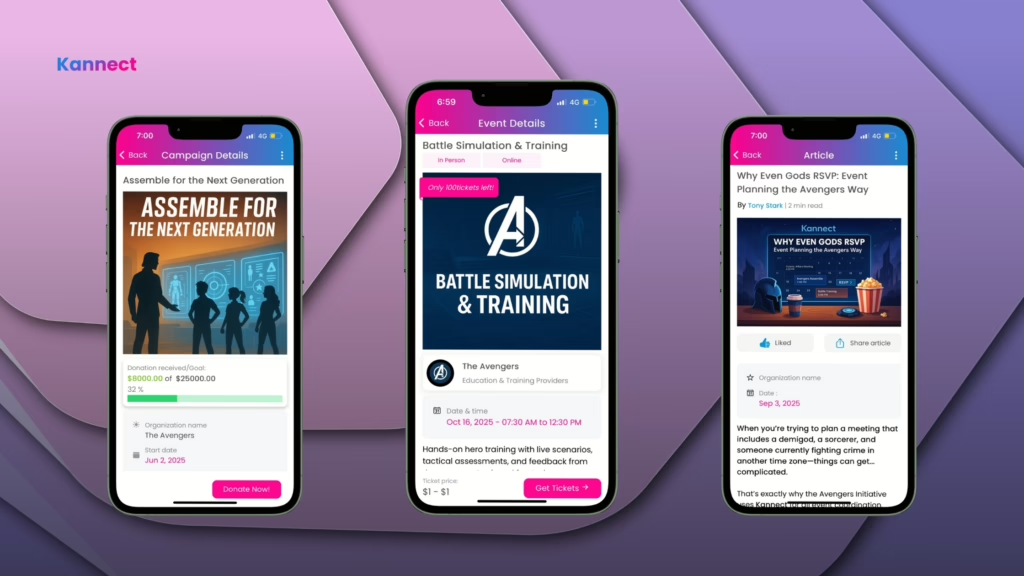
This comprehensive support helps community leaders nurture members through every phase of the engagement cycle, building strong, active, and long-lasting communities.
Ready to implement the 3-step engagement cycle framework in your community?
Implement the 3-step engagement cycle framework to create thriving, predictable communities. Explore Kannect’s stage-specific tools for seamless lifecycle management. Start your healthy engagement cycle with Kannect today.
💡 Create your free Kannect trial today or schedule a demo and start empowering leaders and members through effective and strategic engagement.
🔔 Stay connected and inspired by following Kannect on our social platforms (links below) for expert advice, success stories, and practical resources that strengthen your mission.
✔️ Subscribe to The Community Engagement Playbook for weekly strategies and insights to nurture authentic engagement and sustainable community growth.
Take the leap: empower your members, unlock potential, and amplify the impact of your nonprofit and community with Kannect. Your journey to improved member engagement and stronger communities begins here.
Try Kannect today

Proudly powered by WordPress
FAQ: Quick Answers to All You
What is an engagement cycle in communities?
An engagement cycle is the repeating member journey through entrance, leveling, and leaving stages, designed for predictable participation and growth. It prevents drop-offs by addressing each phase intentionally. Healthy communities renew through this structured loop. For example, a fitness group uses welcome posts for entrance, weekly challenges for leveling, and goodbye shout-outs for leaving, members cycle back often, keeping activity steady.
Why design for the leaving stage in engagement cycles?
Leaving produces referrals, alumni advocates, and future returns when handled gracefully. It acknowledges life changes without stigma. This closure sustains overall community health and legacy. A book club sends “Thanks for your reads, stay in touch” notes to departing members, who later refer friends and rejoin for special events.
How does entrance impact the full engagement cycle?
Strong entrance builds identity, confidence, and first actions, fueling leveling progression. Weak entrances cause immediate drop-offs. One-week action metrics predict long-term success. New members in a parenting forum who post an intro get replies fast, moving to daily tips shares, 80% stay active vs. 20% from silent joins.
What drives success in the leveling stage?
Progressive roles like sharing, mentoring, and ownership create meaning and momentum. Visible growth prevents stagnation. Monthly advancement ensures sustained contribution. A gardening group starts members with photo shares, then tip-giving, and event hosting, trackers show most advance monthly, boosting group events.
How does Kannect optimize engagement cycles?
Kannect automates onboarding for entrance, tracks progress for leveling, and nurtures exits. Analytics reveal stage bottlenecks. It scales complete lifecycle management seamlessly. Leaders set auto-welcomes, role badges, and exit surveys, dashboards spot stuck members for quick nudges, cutting drop-offs by half.
Can small communities use this engagement cycle framework?
Yes; simplified rituals and metrics work at any scale. Focus on progression over volume. It builds resilience regardless of size. A local meetup of 50 uses email intros (entrance), volunteer shifts (leveling), and thank-you cards (leaving), steady growth without big tools.
Leave a comment