Community Platform Comparison: Unlocking 7 Key Insights on Kannect vs Traditional
Event management tools, CRMs, and social platforms each serve a purpose, but none were designed to support communities holistically. This article breaks down where these platforms stop short at community engagement and why organizations feel constant friction despite using well known tools. Through a clear community engagement platform comparison, it shows how relying on disconnected systems leads to fragmented experiences for members. The article positions community engagement software as the missing infrastructure that connects events, communication, and participation into a single, reliable home.
Table of Contents
Choosing a community platform often feels overwhelming. Feature lists are long. Pricing tiers are confusing. Every tool claims to improve engagement, streamline communication, and grow membership.
Yet many organizations switch platforms only to find themselves in the same place months later. Engagement plateaus. Discovery remains limited. Leaders still struggle to reach their members.
This happens because most community platform comparisons focus on features instead of outcomes. They compare tools without questioning whether those tools were designed for communities in the first place.
1. What Traditional Community Platforms Do Well
Traditional community platforms are not inherently bad. Many of them do exactly what they were designed to do.
Some are excellent at hosting events and managing registrations.
Some are strong at managing contacts and data.
Some provide discussion boards or messaging capabilities.
Some integrate well with email or payment tools.
These platforms often solve one specific problem efficiently. For organizations with a narrow use case, this can feel sufficient at first.
The issue arises when these tools are expected to serve as the foundation of an entire community.
2. Where Traditional Community Platforms Stop Short
Most traditional community platforms are closed systems. They are designed to manage people who are already inside the community, not to help new people discover it.
Discovery is often treated as an afterthought or ignored entirely. Communities must rely on external channels like social media, ads, or word of mouth to bring people in. Once growth slows, engagement begins to stagnate.
Additionally, many platforms assume that activity equals engagement. They provide tools for posting, messaging, and hosting events, but they do not address whether members are actually seeing or finding that content.
This is where many communities hit a ceiling.
3. Why Engagement Plateaus Over Time
When a community platform lacks discovery, growth depends on the same group of people showing up repeatedly. Over time, this creates fatigue for both leaders and members.
Leaders feel pressure to create more content and more events to keep engagement alive. Members feel overwhelmed or disengaged because participation starts to feel repetitive or forced.
Without new members entering the ecosystem and without clear visibility into what is happening, engagement naturally declines.
This plateau is often misdiagnosed as a content or leadership issue when it is actually a platform limitation.
4. The Discovery Gap Most Platforms Ignore
The biggest difference in a modern community platform comparison is not features. It is whether the platform supports discovery.
Discovery answers critical questions that traditional platforms overlook.
Can people find this community without already knowing it exists
Can members easily see what is happening without scrolling or searching
Can content remain visible over time instead of disappearing
Can discovery happen without relying on algorithms or ads
Most platforms were not built to answer these questions. They assume discovery happens somewhere else.
5. How Kannect Approaches Community Differently
Kannect was built around the idea that communities need both a home and a way to be discovered.
Instead of functioning as a closed system, Kannect creates multiple pathways for discovery. Organizations have discoverable profiles and shareable pages that update automatically as they post. Members can find organizations aligned with their interests and choose how they want to stay informed.
Everything an organization shares lives in one place and remains accessible. Discovery is not a marketing tactic. It is built into the infrastructure.
This approach shifts communities from chasing attention to being consistently visible.
6. Comparing Outcomes Instead of Features
When comparing a community platform, the most important question is not what features are included. It is what outcomes the platform enables.
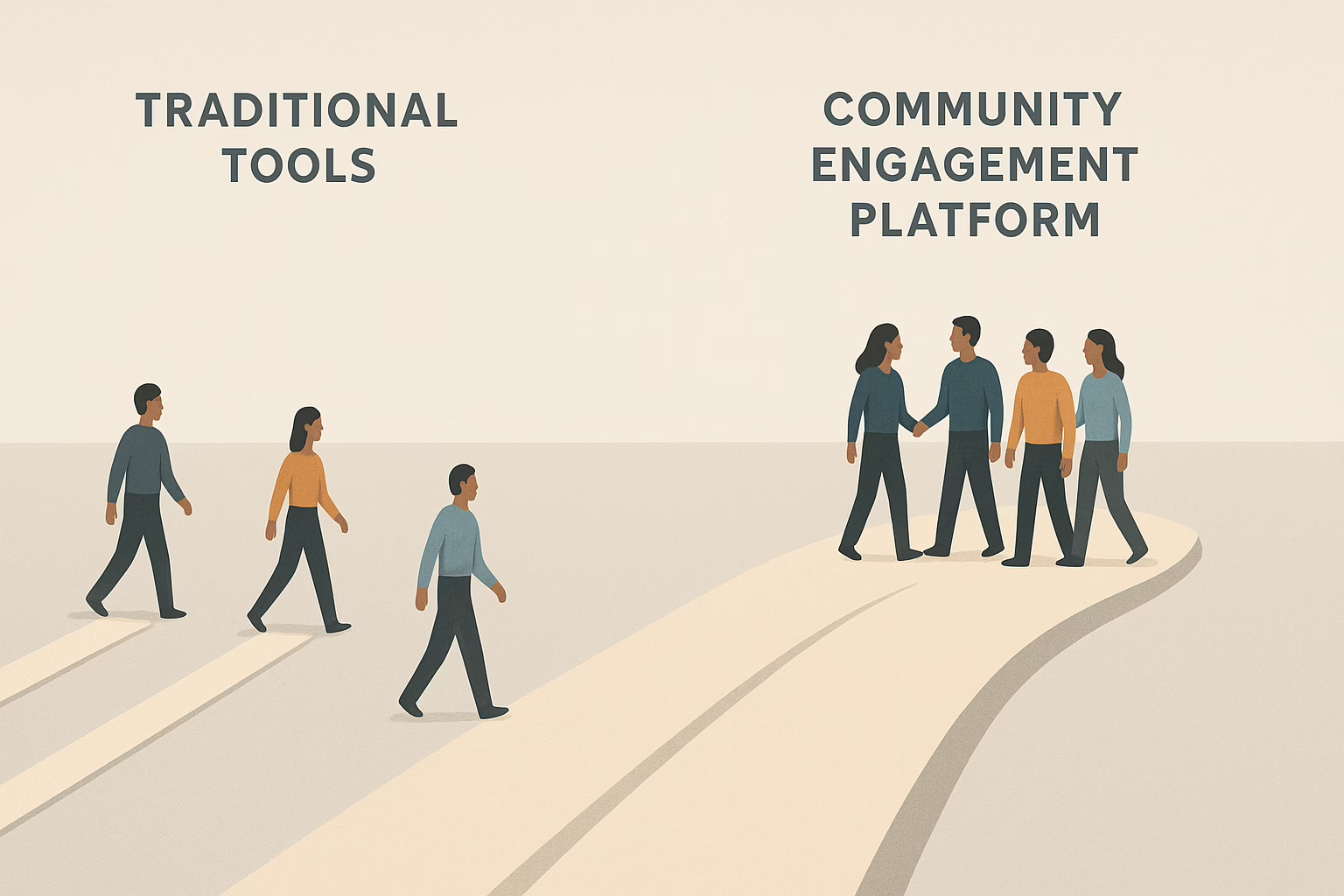
Traditional platforms help manage activity.
Kannect helps sustain engagement and growth.
Traditional platforms assume members will find content.
Kannect ensures content is discoverable.
Traditional platforms require multiple tools to fill gaps.
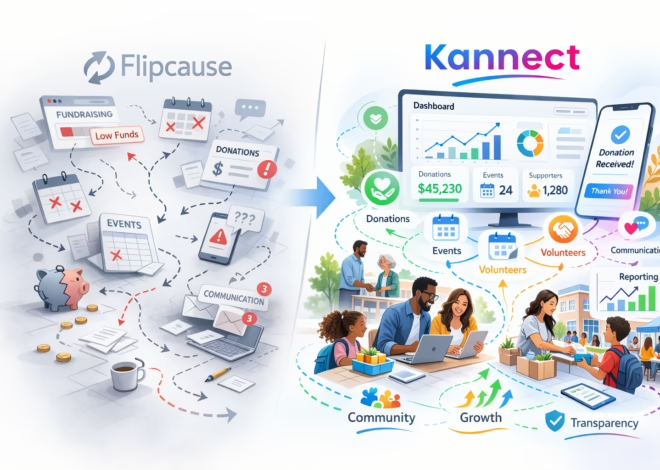
Kannect reduces fragmentation by design.
This difference becomes more meaningful over time, especially for organizations focused on long term impact.
7. Choosing the Right Community Platform Alternative
The best community platform is not the one with the longest feature list. It is the one that aligns with how communities actually behave.
People want clarity.
They want one place to go.
They want to discover opportunities without effort.
They want to stay informed without fighting algorithms.
Platforms that ignore these realities will continue to struggle, no matter how many features they add.
Ready to Compare Community Platforms the Right Way?
Kannect is designed for organizations that want more than activity tracking. It gives communities a dedicated home and a built in discovery engine so engagement and growth can happen naturally.
If you are evaluating community platform alternatives and feel stuck choosing between tools that all look the same, it may be time to change how you compare them.
See how Kannect redefines what a community platform can be.
Helping organizations thrive, members participate, and communities flourish.
Frequently Asked Questions
What should I look for in a community platform comparison?
You should evaluate whether the platform supports discovery, reduces fragmentation, and provides a clear home for members. Features matter less than outcomes like visibility, engagement, and growth.
Why do traditional community platforms struggle with growth?
Most traditional platforms are closed systems that rely on external channels for discovery. Without built in discovery, growth slows and engagement eventually plateaus.
Is a community platform the same as community management software?
Community management software often focuses on administration and activity tracking. A true community platform should support discovery, engagement, communication, and long term growth.
How is Kannect different from other community engagement platforms?
Kannect combines a dedicated community home with built in discovery. It allows organizations to be found, followed, and engaged with without relying on social media algorithms.
Can Kannect replace multiple community tools?
Yes. Kannect is designed to reduce tool overload by centralizing updates, events, and communication in one platform built specifically for communities.
Who should consider switching to a community platform alternative like Kannect?
Organizations that feel limited by closed platforms, declining engagement, or constant reliance on ads and social media should consider a discovery first community platform.