Why Community Engagement Is Failing in 2026 (It’s Not Because People Don’t Care)
Table of Contents
Community leaders everywhere are asking the same question. Why does engagement feel harder than ever, even when people say they care?
Events struggle to fill. Important updates go unseen. Emails are opened but nothing happens. Social posts reach only a fraction of followers. The assumption is often that people are disengaged, distracted, or simply no longer interested. That there is a member engagement decline.
That assumption is wrong.
Community engagement is not failing because people do not care. In fact, community engagement is failing because the systems communities rely on were never designed to reliably inform, connect, or serve them.
The Myth of Disengaged Members
When members do not show up, it is easy to assume apathy. When messages go unanswered, it feels like indifference. When member engagement declines, leaders blame attention spans or content quality.
In reality, most members still care deeply about the organizations they join. They join because the mission matters to them. They follow because they want to stay informed. They attend when they know something is happening and when it fits into their lives.
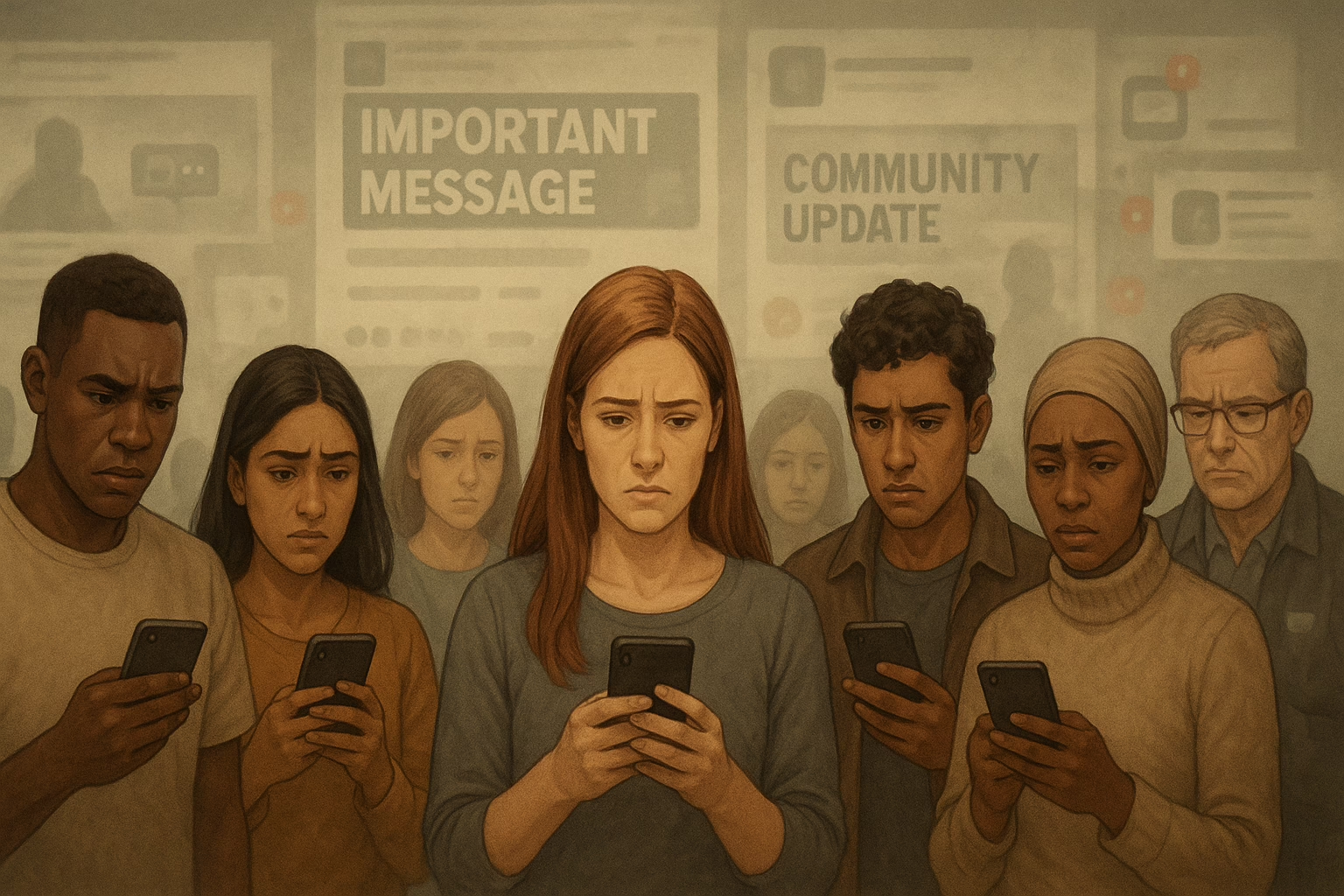
The problem is not a lack of interest. The problem is that members do not consistently receive the information they opted in to receive, and when they do, it is often too late or buried under noise.
Disengagement is often a visibility issue, not a motivation issue.
How Algorithms Decide What Communities See
Most communities rely on social platforms as their primary communication channel. These platforms were not built to prioritize community updates. They were built to maximize attention, engagement, and advertising revenue.
Algorithms decide what appears in a feed based on factors like predicted engagement, virality, and relevance to platform goals. Important community updates compete with viral videos, trending topics, and paid content. Even when someone follows an organization, there is no guarantee they will see its posts. And this is why communities struggle.
This leads to a frustrating reality for community leaders.
You can have thousands of followers and still reach only a handful of people. You can post consistently and still see minimal engagement. You can promote an event for weeks and have members tell you they never saw it.
This is not a content problem. It is an algorithm problem. And it’s why community engagement is failing.
Why Effort Alone Is Not Fixing Engagement
When engagement drops, the instinct is to do more. More posts. More emails. More events. More tools.
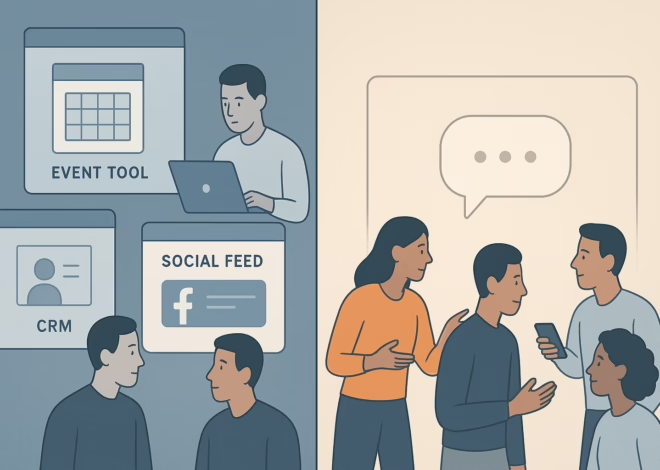
Organizations add new platforms hoping each one will solve the problem. A CRM for contacts. An event platform for registrations. Social media for visibility. Email for updates. Messaging tools for conversations.
Instead of improving engagement, this often makes it worse.
Information becomes fragmented across multiple systems. Members do not know where to look for updates. Leaders spend more time managing tools than serving their communities. Messages get duplicated, delayed, or missed entirely.
More effort does not fix broken infrastructure. It only increases burnout.
The Real Reason Communities Feel Quiet
Communities feel quiet because they do not have a clear home.
A home is a dedicated place where members know they can go to find what is happening. It is where updates live. It is where events are announced. It is where resources are shared. It is where communication happens without competing for attention.
Without a home, communities are scattered. Members rely on algorithms to surface information. Leaders rely on pay to play promotion just to reach people who already opted in.
This is why even well run communities struggle. The issue is not leadership or mission. The issue is that the community exists across too many disconnected systems.
Why Community Engagement Is Failing and What Needs to Change
For community engagement to work, organizations need to stop chasing attention and start building infrastructure.
This means shifting away from relying solely on feeds and fragmented tools and toward creating owned, centralized spaces designed specifically for communities.
A strong community system should do a few critical things well.
• It should reliably inform members without algorithm interference
• It should give members one clear place to find updates, events, and resources
• It should reduce tool overload instead of adding to it
• It should make participation predictable and easy
When communities have a home, engagement becomes natural. Members know where to go. Leaders know where to communicate. Important information reaches the people it was meant for.
Engagement improves not because people suddenly care more, but because the system finally supports the relationship.
Engagement Is Not Dead. It Is Displaced.
The idea that people no longer care about communities is one of the most damaging myths leaders believe. People still want to belong. They still want to contribute. They still want to stay informed.
What they do not want is to hunt for information, miss opportunities, or compete with viral content just to stay connected.
Community engagement is not failing because people stopped caring. It is failing because the tools communities rely on were never designed to bring people together.
Give your community a home. Keep it informed. Let it grow.
Ready to Give Your Community a Home?
Kannect was built for organizations that are tired of chasing online community engagement problems across fragmented tools and unreliable algorithms. It gives communities a dedicated home where members can reliably discover updates, events, and resources in one place.
If your community feels quieter than it should, the problem is not your mission or your effort. It is the system you are using.
Learn how Kannect helps communities connect, communicate, and grow without fighting algorithms.
Helping organizations thrive, members participate, and communities flourish.
Frequently Asked Questions
Why is community engagement failing across so many organizations?
Community engagement is declining because most organizations rely on systems that do not reliably deliver information to members. Social media algorithms limit reach, messages compete with viral content, and updates are often seen too late or not at all. This creates the appearance of disengagement even when members still care.
Are people actually less interested in joining communities today?
No. People still want to belong to communities that align with their interests and values. The issue is access and visibility. Many people miss events and resources simply because they do not know they exist or hear about them after the fact.
Why do social media platforms not work well for community communication?
Social media platforms are designed to maximize attention and ad revenue, not to ensure that community updates reach followers. Algorithms decide what content is shown, which means important announcements often get buried or never seen, even by people who have opted in.
What does it mean to give a community a “home”?
Giving a community a home means creating a dedicated, centralized space where members know exactly where to find updates, events, resources, and communication. It removes guesswork and reduces dependence on multiple disconnected tools.
How does a community home improve engagement?
A community home improves engagement by creating clarity. When members know where to go for information, participation becomes easier and more predictable. Leaders spend less time chasing attention and more time supporting their members.
Is adding more tools a good way to increase engagement?
No. Adding more tools often fragments communication and makes engagement worse. When information is spread across too many platforms, members miss updates and leaders experience burnout. Engagement improves when tools are consolidated into a single system built for communities.
How is Kannect different from social platforms or event tools?
Kannect is designed specifically for communities, not content distribution or transactions. It provides organizations with a dedicated home where members can discover updates, events, and resources without algorithm interference, while giving members control over how they stay informed.
Who is this approach best suited for?
This approach is ideal for nonprofits, associations, chambers of commerce, coworking spaces, educational institutions, and mission driven organizations that need a reliable way to connect with their members and prove engagement without relying on pay to play systems.
- 7 Urgent Reasons Nonprofits Are Researching Flipcause and Rethinking Their Fundraising Platform
- 10 Signs You Need a Community Engagement Platform Built for Discovery, Not Algorithms
- 7 Ways Community Engagement ROI Proves Your Platform Is Either Working or Failing
- 5 Reasons a Community Engagement Platform Comparison Exposes the Limits of Eventbrite, Facebook, and CRMs
- Why Doing More in 2026 Is Not Fixing Your Community Engagement Strategy

Related Posts
10 Signs You Need a Community Engagement Platform Built for Discovery, Not Algorithms
7 Ways Community Engagement ROI Proves Your Platform Is Either Working or Failing