5 Reasons a Community Engagement Platform Comparison Exposes the Limits of Eventbrite, Facebook, and CRMs
Event management tools, CRMs, and social platforms each serve a purpose, but none were designed to support communities holistically. This article breaks down where these platforms stop short at community engagement and why organizations feel constant friction despite using well known tools. Through a clear community engagement platform comparison, it shows how relying on disconnected systems leads to fragmented experiences for members. The article positions community engagement software as the missing infrastructure that connects events, communication, and participation into a single, reliable home.
Table of Contents
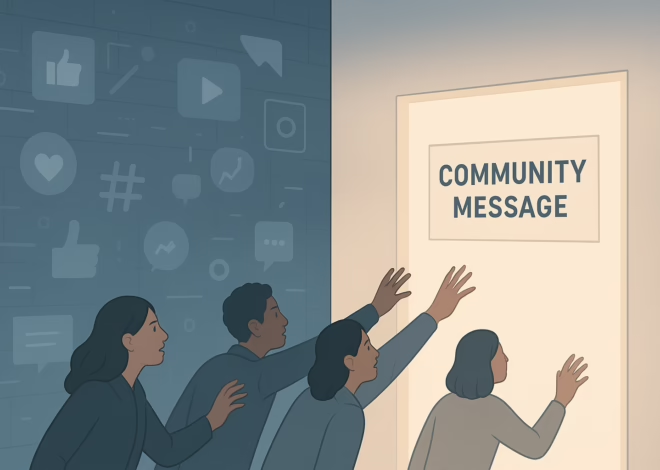
Many organizations believe their community struggles because they have not found the right event tool, social platform, or CRM. As a result, they stack tools, hoping one more system will finally fix engagement.
A proper community engagement platform comparison reveals a different truth. These tools were never designed to build or sustain communities. They were designed to solve isolated problems.
Understanding where these tools fall short explains why so many communities feel fragmented, hard to grow, and difficult to measure.
Reason 1 Event Management Tools Are Built for Transactions, Not Relationships
Eventbrite and similar event management tools are excellent at one thing. They help people register for events.
What they do not do is support ongoing community engagement. Once an event ends, the relationship often ends with it. Attendees leave the platform, and organizers must rely on email exports or separate tools to stay in touch.
This creates a cycle where each event starts from scratch instead of building momentum.
A true community engagement platform treats events as one touchpoint within a larger ecosystem, not the entire experience.
Reason 2 Facebook Groups Rely on Algorithms Instead of Intent
Facebook Groups are often used as free community hubs, but they come with significant limitations.
Visibility is controlled by algorithms. Important updates are easily missed. New members struggle to understand what is happening or where to start. Content disappears quickly unless it is constantly reposted.
Communities end up competing for attention inside a platform designed to monetize distraction.
In a meaningful community engagement platform comparison, any tool that hides updates behind algorithms immediately creates risk for long term engagement.
Reason 3 CRMs Track Contacts, Not Community Behavior
CRMs are powerful systems for managing leads, pipelines, and customer data. They are not designed to support community interaction.
Most CRMs treat people as records rather than participants. They track emails sent, forms filled, and deals closed. They do not support discovery, shared experiences, or organic engagement.
Using a CRM as a community tool often results in heavy administration with very little participation.
Community engagement software must prioritize people and participation before data.
Reason 4 Tool Stacking Creates Fragmentation
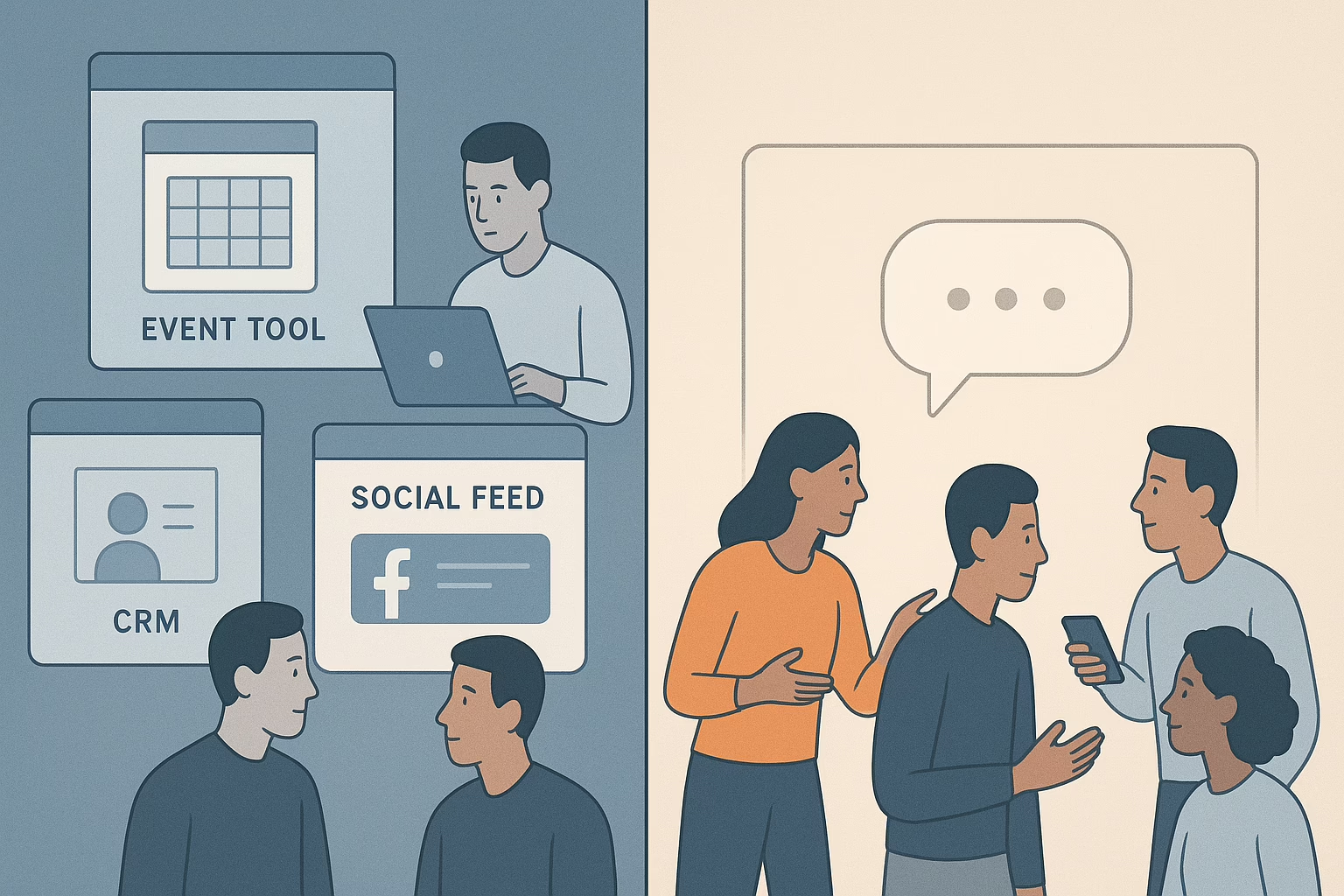
When organizations rely on event tools, social platforms, and CRMs together, fragmentation becomes inevitable.
Members are asked to check multiple platforms. Information is spread across different systems. Leaders spend more time managing integrations than engaging their community.
This fragmentation leads to confusion and disengagement, even when leaders are doing everything right.
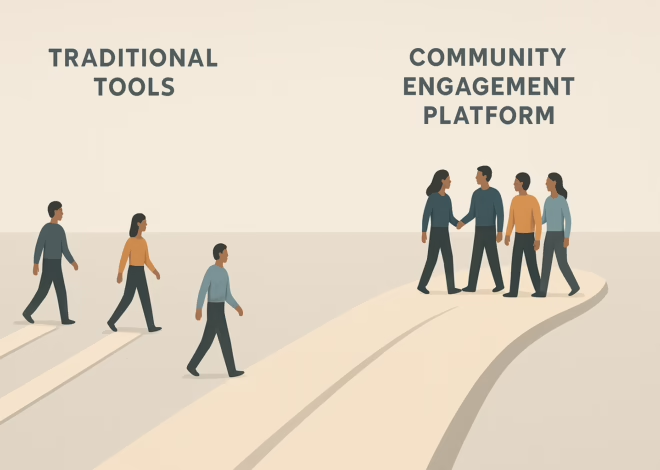
A community engagement platform comparison highlights how consolidation is not just convenient but essential for sustainability.
Reason 5 None of These Tools Solve Discovery
The most overlooked issue in community building is discovery.
Event tools require promotion to fill seats.
Facebook Groups require constant posting to stay visible.
CRMs assume the relationship already exists.
None of these tools help people discover communities they want to be part of.
Without discovery, growth depends entirely on external marketing efforts, which become expensive and exhausting over time.
This is where most communities quietly fail.
How Kannect Changes the Outcome
Kannect was designed to address the gaps revealed in every community engagement platform comparison.
It combines community engagement software with built in discovery so organizations can be found, followed, and engaged with over time. Events, updates, and opportunities live in one place and remain accessible.
Instead of chasing attention, communities gain consistent visibility. Instead of juggling tools, leaders gain clarity. Instead of guessing ROI, organizations see how engagement actually grows.
Kannect is not an Eventbrite alternative or a Facebook replacement alone. It is a fundamentally different approach.
Choosing the Right Community Engagement Platform
The right platform does not force communities to adapt to tools built for something else.
It should support
Ongoing engagement beyond events
Clear communication without algorithms
Discovery without ads
A single home for members
A community engagement platform comparison that ignores these factors will always miss the real problem.
Build a Community That People Can Actually Find
Kannect helps organizations move beyond disconnected tools and into a system designed for discovery, engagement, and long term impact.
If your community feels scattered across platforms or overly dependent on events and social media, it may not be a strategy issue. It may be a platform issue.
See how Kannect redefines community engagement.
Helping organizations thrive, members participate, and communities flourish.
Frequently Asked Questions
What is the most important factor in a community engagement platform comparison?
The ability to support discovery and sustained engagement is more important than individual features. Platforms should help communities grow without relying on constant promotion.
Are event management tools enough to build a community?
No. Event tools focus on registrations and attendance, not long term relationships or engagement between events.
Can Facebook Groups work as a community platform?
Facebook Groups can support short term interaction, but algorithm controlled visibility and lack of structure limit their effectiveness for long term communities.
Why are CRMs not suitable for community engagement?
CRMs are built to manage contacts and sales data, not participation, discovery, or shared experiences.
How does Kannect compare to Eventbrite and Facebook?
Kannect provides a centralized, discoverable community home that does not rely on algorithms or one time events to drive engagement.
Who should use a community engagement platform like Kannect?
Organizations focused on sustainable growth, measurable engagement, and long term community impact benefit most from a discovery first platform.