Why Doing More in 2026 Is Not Fixing Your Community Engagement Strategy
Table of Contents
When community engagement starts to slip, the default response is almost always the same. Do more.
Post more often. Host more events. Send more emails. Try another tool. Launch another channel. Increase promotion.
And yet, for many organizations, community engagement continues to decline despite the extra effort.
This is not because the strategy is wrong. It’s because doing more is trying to fix the wrong problem.
The Trap of “More” in Community Engagement Strategies
Most community engagement strategies are built around activity. If engagement is low, the assumption is that there is not enough content, not enough outreach, or not enough programming.
This leads organizations into a cycle of constant output. Leaders and teams spend more time creating, posting, promoting, and managing than ever before, while results remain inconsistent.
The issue is not effort. The issue is that activity does not equal engagement when the underlying system is broken.
Doing more inside a fragmented system only increases noise.
Tool Overload Is Hurting Member Participation
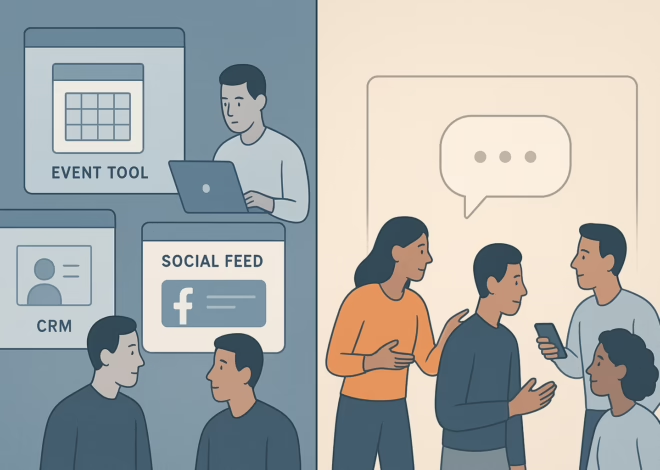
As organizations try to increase community engagement, they often add tools to solve specific problems.
An event platform for registrations.
Email software for announcements.
Social media for visibility.
Messaging tools for conversations.
CRMs for tracking contacts.
Each tool makes sense on its own. Together, they create confusion.
Members are expected to check multiple platforms to stay informed. Updates live in different places. Conversations are scattered. Context is lost. Over time, members disengage not because they are uninterested, but because participation requires too much effort.
Tool overload is one of the biggest barriers to consistent member participation.
Why More Content Creates Less Clarity
Another common response to low engagement is increasing content volume. More posts. More reminders. More notifications.
Unfortunately, more content does not automatically create more engagement. In many cases, it does the opposite.
When members are flooded with updates across multiple platforms, they stop paying attention. Important information blends into the background. Events feel easy to miss. Resources feel hard to find.
Clarity drives engagement. Volume without structure erodes it.
The Hidden Cost of Community Burnout
Doing more does not only affect members. It affects the people running the community.
Community leaders often feel pressure to keep pushing, even when results are flat. They justify low engagement by blaming algorithms, timing, or budget limitations. They move quickly to the next initiative without ever fixing the root issue.
Over time, this leads to burnout. Teams spend their energy maintaining systems instead of serving people. The mission becomes harder to sustain.
Burnout is not a leadership failure. It is a system failure.
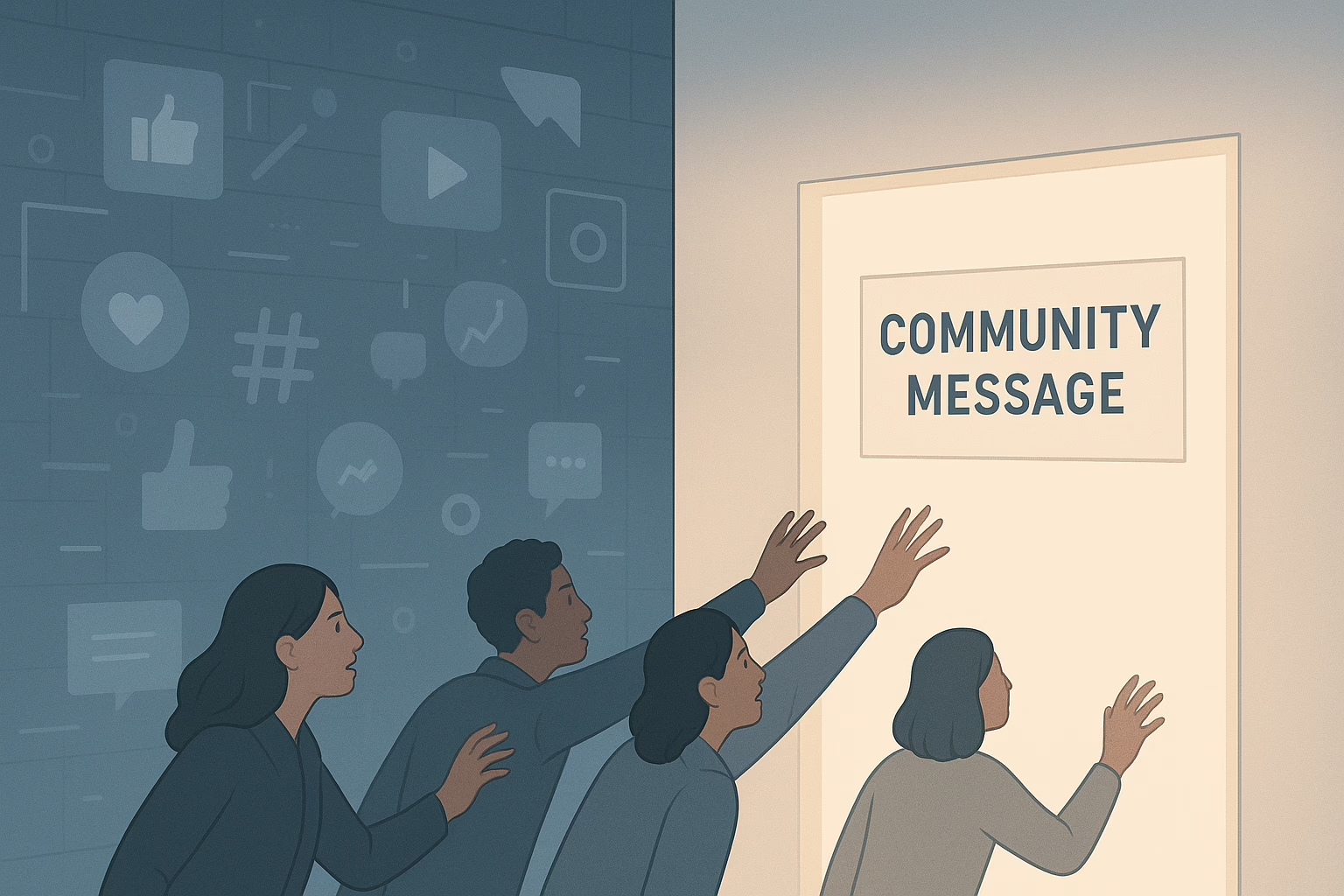
Why Engagement Needs a Home
Community engagement works best when there is a clear, dedicated place for it to happen.
A home gives members certainty. They know where to find updates. They know where events are announced. They know where resources live. They know where to engage.
Without a home, engagement is scattered across feeds, inboxes, and platforms that were not designed to work together. Members miss information. Leaders repeat themselves. Participation becomes unpredictable.
Engagement improves when communities stop spreading activity everywhere and start centralizing it somewhere intentional.
What Happens When Members Know Where to Go
When a community has a dedicated home, behavior changes.
Members check in proactively instead of waiting for reminders.
Events feel easier to discover and attend.
Resources are used instead of forgotten.
Communication feels consistent instead of chaotic.
This is not because people suddenly become more motivated. It is because the friction is removed.
The best community engagement strategies reduce effort, not increase it.
Doing Less, Better, in the Right Place
The goal of community engagement is not to be everywhere. It is to be clear.
Organizations that succeed are not the ones doing the most. They are the ones creating systems that make participation easy and predictable.
When engagement has a home, leaders can focus on impact instead of output. Members feel supported instead of overwhelmed. Communities grow without constant pushing.
Ready to Simplify Community Engagement?
Kannect helps organizations replace tool overload with a single, dedicated community home. A community engagement platform that centralizes updates, events, and communication so members know exactly where to go and leaders can stop doing more just to get less.
If your engagement strategy feels exhausting instead of effective, it may be time to rethink the system behind it.
Learn how Kannect helps communities increase engagement by doing less, better.
Helping organizations thrive, members participate, and communities flourish.
Frequently Asked Questions
Why do traditional community engagement strategies stop working over time?
Traditional community engagement strategies focus on activity rather than infrastructure. As tools multiply and platforms fragment, effort increases while clarity decreases, leading to lower engagement.
Can posting more content increase community engagement?
Posting more content only works when members know where to find it. Without a centralized home, increased content often creates noise rather than clarity and leads to disengagement.
What causes community burnout for leaders?
Community burnout is caused by managing too many tools, chasing unreliable channels, and repeating efforts without sustainable results. It is a system problem, not a leadership problem.
How does having a community home increase engagement?
A community home creates consistency and predictability. Members know where updates live and how to participate, which removes friction and improves engagement naturally.
Is it better to use fewer tools for community engagement?
Yes. Fewer, well designed tools reduce fragmentation and confusion. Consolidation improves both member participation and leader efficiency.
How does Kannect support better community engagement strategies?
Kannect provides a centralized platform designed specifically for communities. It gives organizations a dedicated home for communication, discovery, and engagement without relying on social algorithms.

Related Posts

10 Signs You Need a Community Engagement Platform Built for Discovery, Not Algorithms

7 Ways Community Engagement ROI Proves Your Platform Is Either Working or Failing