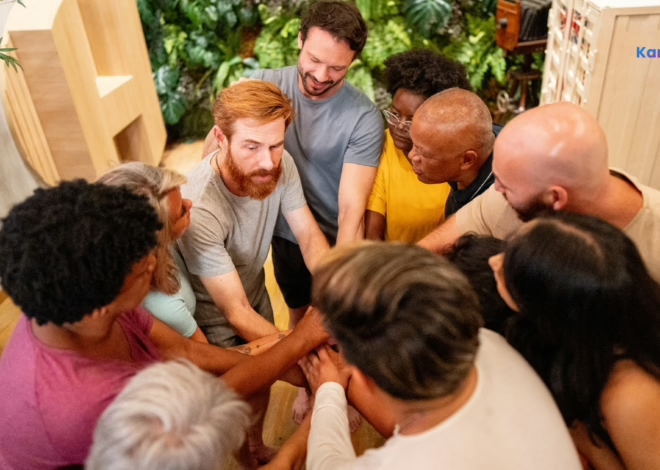
4 Ways Volunteering Creates Lasting Bonds and Proven Tips to Recruit and Engage Volunteers
Table of Contents
Smart Summary: Here’s what this blog on Support groups will explore
- The Heart of Giving Lies in Community: Volunteering builds communities that support, uplift, and create lasting social bonds beyond just giving time.
- Shared Purpose: Volunteering unites people working side-by-side, forming deep friendships through shared goals and meaningful causes.
- Learning and Growing: Volunteers develop new skills and confidence, enriching their personal and professional lives through service.
- Shared Responsibilities: Clear roles and rotating leadership energize volunteer communities and deepen connections.
- Celebrating Success: Recognition of even small wins boosts morale, motivates ongoing engagement, and inspires new volunteers.
- Engaging Volunteers with Micro-Missions: Bite-sized, flexible tasks make volunteering manageable and increase participation.
- Additional Engagement Strategies: Story-driven invites, skill matching, social proof, gamification, and transparent impact build strong volunteer teams.
- Fostering Genuine Connection: Warm onboarding, inclusive communication, celebrating all efforts, and growth opportunities sustain volunteer motivation.
- How Kannect Supports Volunteer Communities: Private groups, targeted messaging, event/task management, engagement analytics, and mobile access simplify coordination and empower leaders.
- Volunteer Communities Build Resilience: Active volunteer networks respond quickly in crises and cultivate long-term community strength through mutual support.
- Volunteering Creates More Than Good Deeds: It fosters friendship, belonging, and purpose, making it a powerful way to connect and contribute meaningfully.
- FAQs
Let’s Dive In!
The Heart of Giving Lies in Community
Volunteering is far more than simply giving time; it is a powerful act that builds communities grounded in support, growth, and shared purpose. When individuals come together to give back, whether through local nonprofits, school groups, or employee resource groups, they are not just performing tasks, but fostering connections that extend well beyond the act of volunteering. These connections become the foundation of resilient communities that adapt, thrive, and make lasting impacts.
Volunteer-led communities hold a unique place in society. They create social networks based on trust, shared effort, and mutual support. The power of volunteering lies as much in these social bonds as in any material outcome. In this light, platforms like Kannect play a vital role by empowering communities to organize more effectively, communicate more clearly, and sustain their mission with far less overhead, enabling volunteers and leaders to focus on meaningful impact.
1. Shared Purpose: Bringing People Together
Volunteering naturally brings people together around a shared, heartfelt purpose; a desire to help others, improve neighborhoods, or champion causes that resonate deeply. This shared sense of mission creates connections that few other activities can inspire. Whether it’s organizing a food drive, cleaning a local park, or mentoring youth, working side-by-side fosters genuine friendships and builds trust.
For example, volunteers at a local animal shelter often describe the joy and sense of community that comes from caring for vulnerable animals alongside others who share their passion. This commitment to a cause generates strong bonds that often last far beyond individual volunteering sessions.
These kinds of purposeful interactions make volunteering a uniquely rewarding social experience, one where the act of giving simultaneously builds enduring relationships.
2. Learning and Growing Through Volunteering
Beyond connection, volunteering is an invaluable space for growth and skill development. Volunteers often discover new talents, build self-confidence, and awaken strengths they might not have realized they possessed. For instance, a marketing professional volunteering at a charity event might sharpen their public speaking and organizational skills, while students engaged in environmental groups gain firsthand teamwork and leadership experience.
These opportunities for growth make volunteering doubly rewarding: they benefit the community and enrich volunteers’ personal and professional lives. Volunteers who continuously develop new skills through meaningful engagement tend to stay involved longer and bring greater enthusiasm and commitment to the cause.
3. Energizing Community with Shared Responsibilities
Successful volunteer communities thrive by distributing responsibility among members. When roles are clearly assigned based on individual skills and interests, volunteers develop a sense of ownership, increasing motivation and commitment.
Neighborhood groups that rotate leadership roles exemplify best practice: they bring fresh ideas and perspectives, prevent burnout, and allow new faces to contribute prominently. This rotation not only energizes the community but also deepens interpersonal relationships through shared accountability.
When members feel they have a real stake in the community’s mission, they are more likely to actively engage volunteers and sustain their involvement over time.
4. Celebrating Success to Inspire More Giving
Recognition is a powerful catalyst for volunteer retention and morale. Celebrating even small wins, whether through appreciation events, social media shout-outs, or simple thank-you notes, makes volunteers feel valued and motivated to continue their service.
For example, one nonprofit’s weekly stories spotlighting families helped by volunteers inspire ongoing involvement and encourage members to invite others, creating a positive cycle of engagement and giving.
By valuing contributions openly, communities harness the power of appreciation to fuel sustained enthusiasm and growth.
How to Attract and Engage Volunteers: Beyond “We Need Help”
Calling out for help with generic messages like “We need volunteers!” often falls flat in today’s busy world. People want to engage volunteers on terms that fit their skills, schedules, and interests. Fresh, meaningful strategies are necessary to build vibrant, enthusiastic volunteer teams.
One of the most effective methods is the use of micro-missions: bite-sized, easily manageable volunteering tasks that empower individuals to contribute without feeling overwhelmed. Instead of broad, indefinite requests, micro-missions specify discrete roles, such as “Manage our Instagram account for one week,” or “Host a virtual brainstorming session for two hours.”
This approach allows volunteers to test the waters, build confidence, and discover where their strengths best fit, making it easier to commit and engage volunteers meaningfully over time.
Additional Smart Techniques to Build a Volunteer Team
Beyond micro-missions, many organizations that successfully engage volunteers use a combination of creative strategies to deepen connection, motivation, and long-term commitment within their volunteer communities. These techniques tap into human psychology, making volunteering more meaningful, personalized, and enjoyable.
▶ Story-Driven Invitations:
One of the most powerful ways to inspire people to volunteer is through storytelling. Sharing real stories about individuals or communities positively impacted by volunteer efforts creates an emotional connection that generic calls for help simply cannot match. When potential volunteers see how their involvement could change a life or a neighborhood, they become motivated by more than just duty, they feel part of a meaningful mission.
For example, a nonprofit featuring weekly video testimonials of beneficiaries creates a sense of urgency and hope, encouraging people to step forward and engage volunteers with genuine purpose.
▶ Skill-Based Volunteering:
Matching volunteers to roles that align with their personal or professional skills not only maximizes impact but also fosters pride and sustained involvement. When a volunteer who has photography skills is asked to document events, or a software engineer helps design a community website, they feel that their unique talents are appreciated and put to good use.
This personalization reduces burnout and increases job satisfaction, as volunteers see their contributions making a direct difference. Organizations that create detailed profiles of volunteer skills and preferences can easily deploy this strategy to boost engagement.
▶ Social Proof and Peer Influence:
Humans often look to social cues before committing to new activities. Highlighting volunteer spotlights on social media, newsletters, and community meetings leverages the power of peer influence. When people see friends, colleagues, or role models actively engaged and enjoying their experience, they are far more likely to join.
Showcasing volunteers’ stories, achievements, and even fun moments builds a positive culture that attracts newcomers organically. For instance, a community center posting monthly “Volunteer of the Month” features strengthens identity and draws in others wanting to be part of a valued circle.
▶ Gamification:
Introducing gamification such as badges, levels, achievement awards, or friendly competitions, adds an element of fun and recognition that encourages ongoing participation. Volunteers feel a sense of accomplishment as they reach new milestones, which reinforces their commitment without the pressure of formal performance evaluations. Gamification taps into fundamental motivators like achievement and belonging, all while creating lighthearted engagement.
For example, a wildlife rescue group awarded digital badges for each rescue or outreach event creates excitement and healthy competition that drives consistent volunteering.
▶ Clear Impact Pathways:
Volunteers are more motivated when they can clearly see the effect of their efforts. Transparent communication about how individual contributions lead to real-world outcomes builds trust and enthusiasm. Using visuals such as infographics, testimonials, short video stories, or community impact reports makes the mission tangible.
For example, a food bank sharing monthly data on meals provided and families reached, with stories from those helped, helps volunteers understand how their time translates directly into change. Clear impact pathways reduce volunteer drop-off by linking effort with meaningful results.
Building Genuineness in Your Volunteer Community
The key to long-term volunteer engagement lies in fostering a genuine, authentic community where every individual feels valued and connected. Authenticity creates trust, deepens commitment, and transforms volunteering from a task into a meaningful experience. Here’s how organizations can nurture this vital genuineness:
▶ Welcoming Onboarding:
First impressions matter immensely in volunteer engagement. A warm, informative onboarding process sets the tone for a volunteer’s entire journey. This means welcoming new volunteers with clear communication about what to expect, providing thorough introductions to the community’s culture and mission, and pairing newcomers with experienced mentors for guidance.
Such mentorship helps new volunteers navigate challenges, ask questions freely, and feel supported from day one. This approach not only reduces anxiety but also accelerates integration, increasing the chance that volunteers will stay active and committed.
▶ Inclusive Communication:
Authentic communities thrive on open, two-way communication that honors every voice. This involves using the volunteer community’s preferred channels; whether that’s email, messaging apps, or social media and ensuring dialogue isn’t just top-down announcements but includes regular feedback loops.
Personalized check-ins, polls, or virtual “coffee chats” encourage volunteers to share their ideas, concerns, and experiences openly. By valuing diverse voices and making space for every perspective, the community strengthens a sense of belonging and collective ownership.
▶ Celebrate All Contributions:
Recognition does more than reward effort, it builds a culture of appreciation that fuels motivation and loyalty. Publicly acknowledging contributions, no matter how small, shows volunteers their time and energy are noticed and valued beyond mere hours logged. Simple gestures like shout-outs in newsletters, social media posts, or thank-you notes after events create positive reinforcement.
Celebrations also humanize the community, turning volunteers into celebrated members, not just helpers, which strengthens emotional connection and encourages continued participation.
Offer Growth Opportunities:
Genuine volunteer communities offer more than just roles; they provide pathways for personal and professional development. Creating opportunities for volunteers to deepen their involvement, through training sessions, leadership roles, or new responsibilities, keeps engagement fresh and rewarding. These growth pathways enable volunteers to expand their skills and influence within the community, enhancing their sense of purpose and investment.
For example, offering workshops on public speaking or event management can empower volunteers, help them realize potential they might not have tapped into otherwise, and foster leadership pipelines within the community.
How Kannect Supports Volunteer Communities: Key Features
Kannect offers powerful features designed to ease coordination and help communities engage volunteers with ease:
- Private, secure groups for safe discussion and collaboration
- Targeted announcements and personalized messaging to ensure relevant updates
- Event and task management for smooth planning and tracking
- Engagement tracking and analytics to monitor participation and celebrate milestones
- Effortless member management with segmentation and automated onboarding
- Integrated content sharing for blogs, newsletters, and resources
- Mobile-first access so volunteers can stay connected anytime, anywhere
- Simplified payment and donation processing
- Automations and reminders to reduce manual workload
By removing administrative burdens, Kannect helps volunteer leaders focus on fostering strong, engaged, and effective volunteer communities.
The Volunteer Effect on Community Resilience
Volunteer communities demonstrate unique resilience. They often become first responders in crises, mobilizing quickly due to pre-existing trust and coordination. Research indicates that communities with active volunteer networks recover faster from disasters, benefiting from effective communication and teamwork developed during normal times.
This resilience stems from consistent volunteering; not just in emergencies but through small, everyday acts of service. It nurtures a culture of mutual support and empowerment, sustaining the community long-term. Kannect’s centralized communication and clear workflows strengthen this backbone, transforming good intentions into sustained collective strength.
Wrapping Up: Volunteering Builds More Than Good Deeds
Volunteer-driven communities offer more than help; they build friendship, belonging, and meaningful purpose. These bonds enrich individuals and society, extending dividends beyond immediate tasks to transform lives.
Building and sustaining such communities becomes easier with tools like Kannect, empowering leaders and members to concentrate on impact rather than logistics. As more people seek meaningful connections within busy lives, volunteering remains a powerful way to belong, give, and grow.
Take the Next Step
Start small: join or organize volunteer groups at your workplace, school, or neighborhood. Share leadership, celebrate successes big and small, and use modern tools like Kannect to streamline communication and coordination, making volunteering a rewarding endeavor for all.
Join organizations worldwide utilizing Kannect’s adaptable, human-focused platform.
💡 Create your free Kannect account (for up to 1,000 members) today or schedule a demo and start building your safe space, a place where mental health conversations nurture hope, healing, and belonging.
📬 Subscribe to The Community Engagement Playbook for weekly actionable tips to help you nurture your community authentically and to create thriving digital health support communities.
🔔 Stay inspired and informed: Follow Kannect on LinkedIn | YouTube | Instagram | Facebook and other social channels (links below) for inspiring stories, practical tips, and innovation in community care.
Take the next step: Take the leap, build belonging, ignite passion, and grow impact with Kannect. Your thriving community starts here.
Try Kannect today
volunteer work baltimore, branch volunteer, volunteer with, do i cancel

Proudly powered by WordPress
FAQ: Quick Answers to All Your Questions
1. Why is volunteering essential for building strong communities?
Volunteering creates shared purpose and social bonds that strengthen communities by fostering trust, cooperation, and mutual support.
2. How can organizations effectively engage volunteers?
Using micro-missions, skill-based task matching, story-driven invites, and gamification helps attract and sustain enthusiastic volunteers.
3. What role do shared responsibilities play in volunteer communities?
Assigning clear, rotating roles increases ownership, motivation, and keeps energy high while preventing burnout.
4. How does recognition impact volunteer retention?
Regular appreciation and celebration of contributions boost morale, making volunteers feel valued and more likely to stay engaged.
5. What features does Kannect provide to support volunteer management?
Kannect offers secure group spaces, targeted communication, event/task management, engagement tracking, mobile access, and automation to streamline volunteer coordination.
6. How do volunteer communities contribute to resilience during crises?
Communities with active volunteer networks mobilize faster and recover better thanks to pre-existing trust, communication, and team experience.
7. What are micro-missions and why are they effective?
Micro-missions are small, well-defined volunteering tasks that make participation manageable and less intimidating, increasing volunteer commitment.
8. How can organizations foster genuine connection among volunteers?
By offering warm onboarding, inclusive communication, public recognition, and growth opportunities, organizations build authentic, lasting engagement.