

Table of Contents
Smart Summary: Here’s what this blog on Engagement and Stress in Digital Communities will explore
- Introduction to Digital Engagement Biology: Emphasizes that participation in digital communities is influenced by biological responses, not just psychology.
- Three Biological Forces: Explains dopamine (reward), oxytocin (belonging), and cortisol (threat) as key drivers of online engagement and withdrawal.
- Overload as Threat: Describes how digital clutter biologically mimics social threats and triggers disengagement.
- Designing for Biology: Details how predictability, recognition, trust-building, and structured flow create biologically aligned communities.
- Leadership Shift: Advocates for a biological perspective in community design for sustainable engagement.
- Kannect’s Role: Connects platform features to biological engagement, helping leaders foster thriving, low-stress digital communities.
- Join us: Encourages using Kannect to build communities optimized for biological engagement and growth.
- FAQs
Let’s dive in!
Digital communities are often seen as social or psychological environments, but participation is deeply rooted in biology. Every notification, reply, or silence triggers biological responses that influence members’ emotions and actions. Members engage not as neutral observers but as living organisms responding instinctively to signals of threat, reward, belonging, and effort. For instance, receiving a welcoming message or positive feedback can release dopamine, the brain’s reward chemical, encouraging further participation and reinforcing a sense of inclusion. Conversely, silence or ignored messages can activate stress-related responses, making members feel isolated or undervalued.
Ignoring these biological realities means designing digital communities that exhaust rather than energize their members. Overloading members with constant notifications or bombarding them with disorganized content creates cognitive fatigue, which diminishes motivation to engage. On the other hand, digital communities that respect the biological needs of their members by pacing interactions, highlighting meaningful feedback, and creating safe spaces foster a cycle of positive engagement and sustained growth.
Biological Cues Shape Member Behavior in Digital Communities
One subtle but powerful way biology impacts digital community engagement is through the brain’s processing of social cues. For example, the tone, timing, and clarity of messages influence how safe or connected members feel. Positive social signals, such as public recognition or peer encouragement, stimulate oxytocin, promoting trust and openness. Digital communities that incorporate features like member spotlights, thank-you notes, or clear opt-in paths tap into this biological wiring to deepen belonging.
Additionally, reducing cognitive load by simplifying navigation or summarizing key points, minimizes the mental effort required to participate. This respects the brain’s limited attention capacity and prevents burnout. Active, well-structured digital communities also consider how member effort is rewarded: small, achievable tasks followed by immediate appreciation align with biological reward systems, increasing the likelihood of repeated participation.
Understanding that digital engagement is not just psychological but biological invites a more human-centered approach to community design. Building digital spaces that activate positive biological responses helps create environments where members feel energized, valued, and motivated to connect. This biological sensitivity ultimately supports richer, more resilient digital spaces that thrive on meaningful interaction and lasting engagement.
Three Biological Forces Shape Participation Online
When a member interacts with a digital community, their brain makes rapid judgments around three core questions:
Is this safe?
Is this rewarding?
Is this worth the effort?
These questions map onto three biological drivers that influence engagement:
- Dopamine: The Reward Pathway
Dopamine fuels anticipation and motivates participation. When members get recognized, receive responses, or see progress, their dopamine system activates, encouraging return visits and ongoing contributions. Digital communities that incorporate reward mechanisms such as badges, points, or public recognition, tap into this biological driver to sustain interest and build habits.
For example, a learning platform that awards badges for course completion or a professional network that highlights member achievements triggers dopamine release, rewarding users emotionally and keeping them engaged. However, inconsistency or scarcity of rewards can flip dopamine’s effect into anxiety and disengagement, leaving members frustrated if their efforts go unnoticed or feedback is delayed. - Oxytocin: The Belonging Hormone
Oxytocin underpins trust, connection, and emotional safety. It increases when members experience familiarity, recognition, shared values, and humanized interactions. Digital communities that foster personalized greetings, member spotlights, and supportive environments stimulate oxytocin release, which strengthens bonds and retention.
For instance, an online hobbyist group that celebrates member milestones or encourages authentic storytelling creates moments of emotional connection that enhance belonging. Digital spaces lacking these elements, such as anonymous or transactional forums, struggle to foster belonging and retention because members do not feel seen or emotionally safe. - Cortisol: The Stress Hormone
Cortisol rises when members face judgment risks, uncertainty, or information overload. Unclear posting rules, unpredictable responses, or overwhelming content activate cortisol, leading to stress. Members experiencing high cortisol feel threatened and their nervous systems drive them to disengage quietly as a self-protection mechanism.
For example, a digital community with inconsistent moderation or toxic debates causes many users to withdraw or reduce participation to avoid conflict. Reducing cortisol triggers in digital spaces through clear guidelines, predictable interaction patterns, and manageable information flow creates a safer environment that supports sustained involvement.
Together, these three biological forces: dopamine, oxytocin, and cortisol shape how members experience and participate in digital spaces. Effective community design acknowledges these drivers, using reward and recognition to motivate, fostering connection and safety to build trust, and minimizing stressors that cause withdrawal. This biologically informed approach helps create digital spaces where participation feels natural, rewarding, and sustainable.
Overload Mimics Threat in Digital Communities
Unlike face-to-face settings where emotional safety cues such as body language and tone of voice provide clear signals, digital platforms remove many of these important signals, leaving the brain to fill in missing information by assuming risk. This makes members biologically hyper-alert to potential social threats when they face multiple communication channels, excessive discussions, vague expectations, or undefined roles within digital spaces. What may appear as productive busyness to community leaders often triggers stress and anxiety in members, lowering their willingness to participate.
Digital communities with numerous overlapping threads, notification floods, or unclear guidelines create what the brain perceives as chaotic and unsafe environments. This overload activates the stress hormone cortisol, which signals threat and pushes members toward withdrawal behaviors as a form of self-protection. For example, members bombarded with constant notifications across multiple chat groups or discussion forums may begin to experience digital fatigue, making them less likely to engage or respond meaningfully. They might log in, feel overwhelmed by countless messages, and leave without contributing, a clear sign that overload functions biologically like threat.
Research shows that sustained information overload can lead to cognitive fatigue, poor concentration, and emotional exhaustion, all of which damage engagement in digital spaces. This stress does not just reduce participation in the moment but can erode long-term trust and belonging if members feel perpetually overwhelmed. Mitigating these effects requires intentional design choices in digital spaces to reduce noise and create clear, manageable communication pathways. Examples include consolidating announcements into digest formats, defining specific channels for urgent messages versus casual chat, and providing transparent participation guidelines that reduce uncertainty.
By recognizing how information overload mimics biological threat responses, community leaders can foster safer, more inviting digital spaces. These environments respect members’ cognitive limits and emotional well-being, encouraging sustained engagement and growth rather than disengagement or burnout. This biological insight is critical to designing digital spaces that feel supportive and energizing, not exhausting and threatening.
Engagement Happens When Biology Is Respected
Successful digital communities design systems aligned with human physiology, honoring the way our brains and bodies naturally respond to social environments. Such communities provide predictable, supportive frameworks that reduce stress and encourage consistent, joyful participation. Some best practices include:
- Predictable rhythms that reassure the nervous system:
Regular event schedules, recurring discussion prompts, and weekly themed activities create familiar patterns that help members feel safe and anticipate opportunities to engage.
For example, organizing a “Weekly Highlight” thread or hosting monthly member Q&A sessions establishes a comforting cadence. This consistency appeals to biology’s preference for predictability and lowers anxiety, making engagement feel natural rather than pressured. - Clear progress paths activating reward mechanisms:
Visible markers of achievement such as badges, milestones, or progress bars tap into dopamine-driven reward pathways. These tangible signals of contribution motivate members to participate more actively, knowing their efforts are noticed and valued.
For instance, a digital learning community could award badges for course completion, discussion participation, and mentorship roles, grading involvement while also spurring ongoing growth in digital communities. - Recognition amplifying feelings of contribution:
Public acknowledgment through member spotlights, shout-outs, or thank-you messages releases neurochemicals that strengthen social bonds and deepen trust. Celebrating successes, no matter how small, nurtures a culture of appreciation.
A health-focused community, for example, might spotlight members achieving wellness goals or volunteering, enhancing the sense of belonging and motivating others to contribute similarly. - Distributed roles fostering trust and connection:
Delegating responsibilities such as moderators, content curators, or event organizers not only shares workload but also empowers members with ownership of the community’s wellbeing. This empowerment stimulates oxytocin production, deepening emotional connection and trust within digital communities.
Such shared leadership cultivates a resilient, inclusive culture where members develop a strong sense of commitment. - Structured content flow to reduce overload:
Designing clear channels for different topics, prioritizing urgent updates, and providing digest summaries avoid overwhelming members with information. This reduces cortisol-inducing stress responses related to information overload.
For example, a nonprofit community might separate announcements, discussions, and resources into dedicated, easy-to-find spaces, guiding members to relevant content without fatigue.
The healthiest digital communities make engagement feel safe and natural rather than forced or performative. By respecting biology, they foster environments where participation flows effortlessly from human need for certainty, reward, social connection, and manageable challenge. This deep alignment with our biological design transforms digital communities from mere platforms of interaction into thriving ecosystems that nurture sustained engagement and authentic growth.
Why Leaders Should Think Like Biologists, Not Just Content Creators
Engagement is not about pushing more content or scheduling more events. True engagement in digital communities arises from understanding and designing for the underlying biology of human participation. Leaders who think like biologists focus on lowering risk, clarifying rewards, and fostering consistent belonging rather than merely increasing noise or activity. This biological alignment transforms participation from a matter of willpower into instinctive, almost automatic behavior.

For example, instead of flooding members with constant event invites, biological thinking encourages establishing predictable rhythms that calm the nervous system and build trust over time. Instead of sporadic, untargeted recognition, leaders craft clear feedback loops that activate dopamine reward pathways, encouraging sustained involvement. Rather than expecting members to navigate confusing spaces alone, thoughtful community design provides clear paths and signs that reduce cortisol-driven stress by making participation feel safe and manageable.
When leaders adopt this biological perspective, they create digital communities where members do not just show up out of obligation but feel naturally drawn in by feelings of safety, reward, and belonging. This approach nurtures resilient, engaged communities with authentic interaction at their core, moving beyond content delivery to a more human, effective way of fostering connection and growth.
The Biological Shift Leaders Must Make Next
Rather than simply asking, “How do we get people to show up?” community leaders need to shift focus to the deeper question: “What biological experience does our system create for members?” This shift reframes engagement as a product of the environment’s ability to deliver safety, recognition, and clear progress, rather than the sheer quantity of events or content. Digital communities designed to evoke feelings of trust and reward naturally draw members into participation, making engagement a near-automatic response rooted in human biology.
When a community environment is laden with uncertainty, silence, or fatigue, it unintentionally activates biology’s protective withdrawal mechanisms. Members’ brains interpret these signals as potential threat, triggering stress responses that prompt disengagement, avoidance, or passive lurking. For example, a digital platform with unclear posting rules, unpredictable moderation, or overwhelming content volume creates a biologically unsafe space. Members become hesitant to contribute, fearing judgment or wasted effort, and participation declines.
By embracing biological design principles such as predictable interaction rhythms, visible markers of member progress, and consistent, positive social recognition, leaders can build communities where members feel psychologically safe and motivated. This safety lowers cognitive load, reduces stress hormones like cortisol, and activates reward systems involving dopamine and oxytocin, fostering sustained connection and contribution. In essence, the most successful digital communities are those that do not just chase metrics but intentionally shape the biological experience of belonging and engagement. This paradigm shift elevates leadership from content management to human experience design, enabling communities to thrive authentically and resiliently.
Where Kannect Fits In
Kannect is thoughtfully designed to align with biological principles that underlie how humans engage and connect within digital communities. It provides tools and features that create clear structural pathways, visible markers of progress, and effective recognition systems. These elements reduce cognitive overload and stress, helping members feel safe, valued, and motivated to participate naturally, rather than out of obligation or pressure. The platform’s design enables community leaders to manage complexity and nurture engagement in ways that respect human biological needs for clarity, reward, connection, and manageable effort.
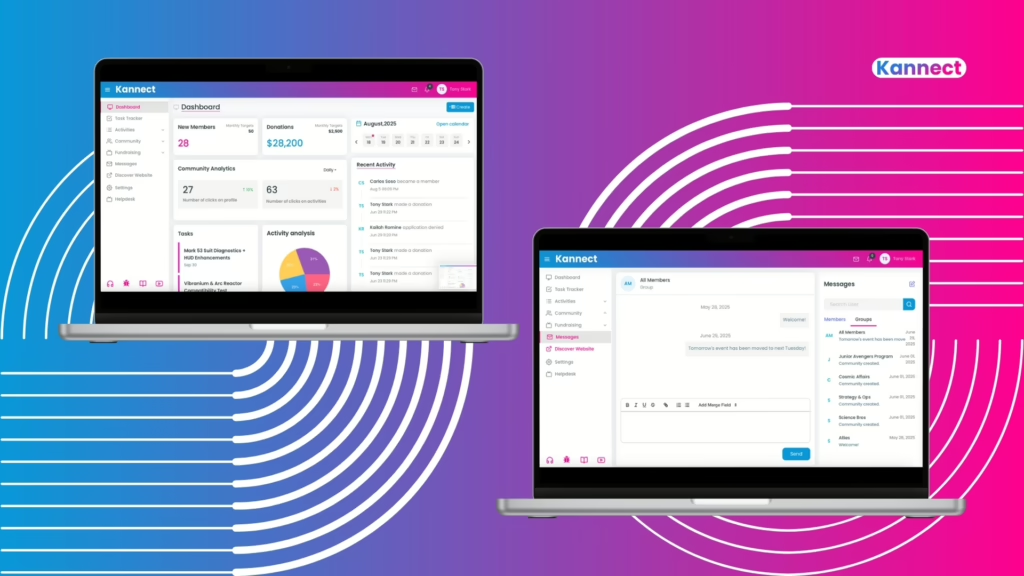
Key ways Kannect embodies these biological design principles include:
- Clear Structures and Navigation: Kannect allows leaders to organize content, conversations, and events into intuitive spaces, helping members find their place easily without feeling overwhelmed. Clear categorization and guided pathways reduce uncertainty and promote confident participation.
- Progress Markers and Milestones: Features like task tracking, event participation records, and membership levels provide visible signs of involvement and growth, which taps into dopamine-driven reward systems, motivating members to stay active and advance within the community.
- Recognition and Social Reinforcement: Kannect enables public and private acknowledgments through announcements, shout-outs, and personalized messages, stimulating oxytocin release that deepens trust and belonging.
- Manageable Interaction Flows: The platform supports customizable notification settings, including daily summaries and urgent alerts, to avoid information overload and reduce cortisol-induced stress, making engagement feel less taxing and more sustainable.
- Integrated Communication and Task Management: Leaders can seamlessly coordinate announcements, events, reminders, and membership activities within a single platform, creating a cohesive community experience that minimizes friction and maximizes meaningful connections.
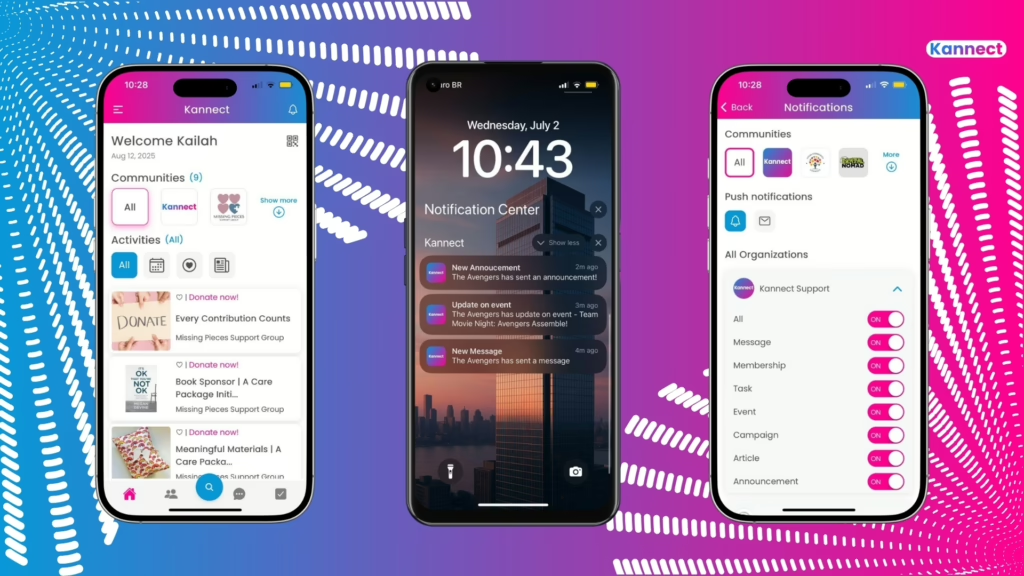
By incorporating these capabilities, Kannect helps transform digital communities into living ecosystems where members are biologically supported to feel safe, recognized, and capable of contributing their best. This creates healthier, more resilient communities characterized by authentic engagement and long-term growth rather than fleeting activity cycles.
For community leaders aiming to build thriving spaces where participation flows naturally, Kannect serves as a powerful partner that respects and integrates core human biological needs into digital engagement strategy.
Ready to design people-first digital communities?
Discover how Kannect can help you build safer, more rewarding, and growth-focused spaces. Start your community transformation with Kannect today.
💡 Create your free Kannect trial today or schedule a demo and start empowering leaders and members through effective and strategic engagement.
🔔 Stay connected and inspired by following Kannect on our social platforms (links below) for expert advice, success stories, and practical resources that strengthen your mission.
✔️ Subscribe to The Community Engagement Playbook for weekly strategies and insights to nurture authentic engagement and sustainable community growth.
Take the leap: empower your members, unlock potential, and amplify the impact of your community with Kannect. Your journey to improved member engagement and stronger communities begins here.
Try Kannect today

online communities, support communities learning networking, brand communities support learning, learning communities networking, types of online communities

Proudly powered by WordPress
FAQ: Quick Answers to All Your Questions
- How does dopamine influence engagement in digital communities?
Dopamine drives anticipation and satisfaction when members receive recognition and see progress, motivating return participation. - Why is oxytocin important for digital community belonging?
Oxytocin fosters trust and emotional connection, which are critical for members to feel safe and bond with each other. - What triggers cortisol in digital community members?
Uncertainty, judgment risk, unpredictable responses, and information overload increase cortisol, leading to stress and disengagement. - How can community leaders reduce stress-driven disengagement?
By providing clear expectations, predictable interactions, recognition, and structured content flow that reduce uncertainty and overwhelm. - How does Kannect help manage biological engagement factors?
Kannect offers features like guided pathways, progress tracking, and recognition systems that align with reward and belonging biology. - Can aligning community design with biology improve member retention?
Yes, communities that respect biological drivers create safe, rewarding experiences that encourage sustained participation and growth.
Leave a comment